Sales & leads
How to distribute new leads to your agents: round robin, rules or fastest responder?
How you route a new lead decides whether it is called in minutes or lost. A practical comparison of manual, round-robin, rule-based and fastest-responder distribution.
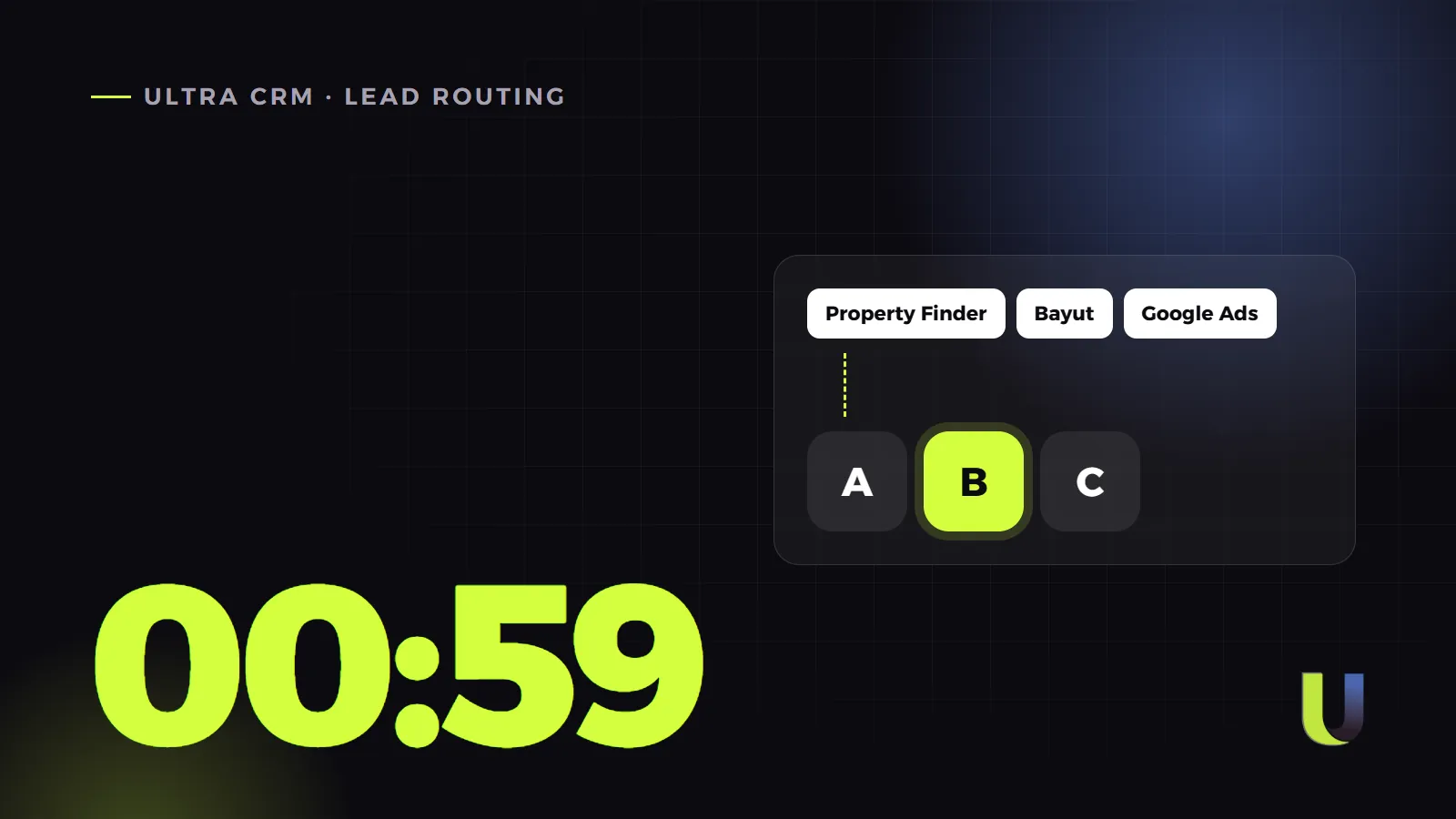
Every brokerage pays for enquiries: Google and Meta ads, portal subscriptions, the company website. But the value of that spend is decided the moment a lead arrives: who calls them, and when. Random or slow distribution turns a paid ad into a forgotten number in a WhatsApp chat.
Why the first minutes matter
A buyer who fills in a form on a property portal usually contacts several agents at once. The first one to call with something useful wins their attention; the one who calls hours later finds a buyer who has already spoken to someone else. So any distribution system has one job: get the lead to the right agent immediately, and tell the manager if nobody contacts them.
Four ways to distribute leads
1. Manual
The manager receives every lead and assigns it. It suits very small teams or VIP clients, but it stops when the manager is in a meeting or on leave, and it can feel unfair to agents.
2. Round robin
Each new lead goes to the next agent in line. Simple and fair, and everyone gets equal chances. The weakness: it doesn’t distinguish between an off-plan specialist and an agent working on resale.
3. Rule-based
You set rules such as: leads for a given project go to the projects team, Russian-speaking leads go to a specific agent, rental enquiries go to the leasing team. It is the most precise method, and it needs a periodic review so rules don’t pile up and conflict.
4. Fastest responder
The lead is offered to a group of agents and the first to accept takes it. Response time improves sharply, but you need clear rules so the fastest agent doesn’t grab everything and neglect follow-up.
What if the lead already exists?
This causes more internal disputes than anything else. The healthy rule: if the client is already in your database, the new enquiry is added to their record and their current agent is alerted, not a new agent. If they ask about a specific listing, it goes to the agent in charge of that listing. That way two agents never call the same person, and the history is never lost.
Checklist for a distribution system that works
- A clear source for every lead: which ad, portal or page it came from.
- Duplicate blocking with normalised UAE numbers (+971).
- A set deadline for first contact, and an alert to the team leader when it passes.
- A weekly report of response time per agent.
- A monthly review of the distribution rules.
In Ultra CRM you choose the method per source: manual, round robin, rules or fastest responder, and the team leader is alerted automatically when an agent is late.
Frequently asked questions
Is fastest-responder unfair to new agents?
It can be if you apply it to every lead. Use it for specific fast-moving sources and keep round robin for the rest.
What is the right deadline for first contact?
The shorter the better. Set a realistic deadline for your team, measure it weekly, then tighten it gradually.
Can I combine several methods?
Yes, and most successful brokerages do: rules for known cases, round robin or fastest responder for everything else.
Key takeaways
- A new lead is won or lost in the first minutes.
- Every method has its place; combining them usually works best.
- An existing client goes to their own agent, not a new one.
- Alerting on delays matters more than the method itself.
Try it yourself in the live demo.